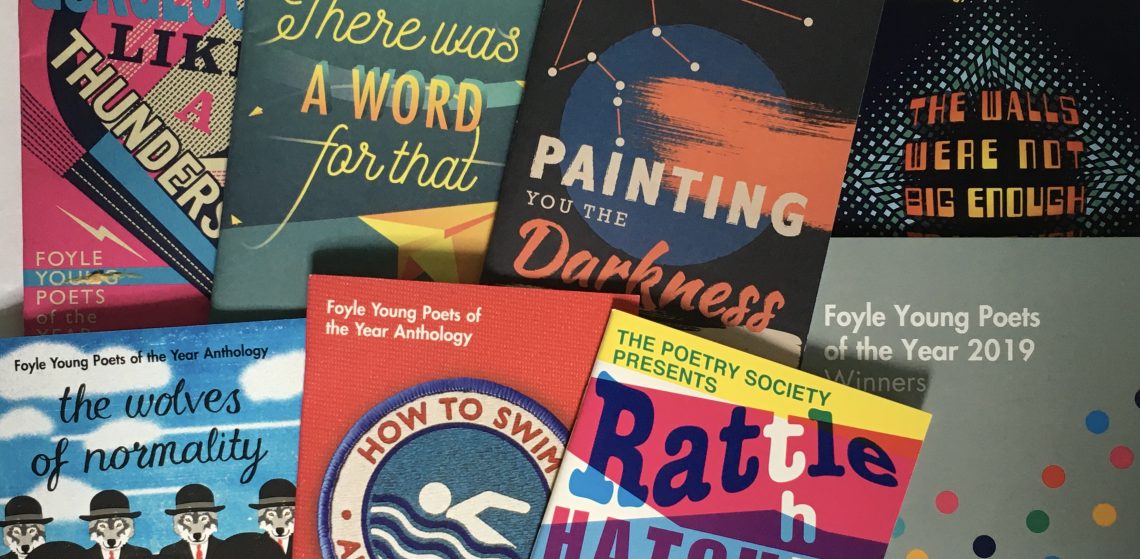
We were overwhelmed by the response to our call for additional young writers for Becoming a Poet to be published … More

Poetry writing development research
We were overwhelmed by the response to our call for additional young writers for Becoming a Poet to be published … More

Writing opportunity for young poets aged 13- 25, who are beginning to break through into the poetry scene with some success in Slam, Spoken Word or page-based work.
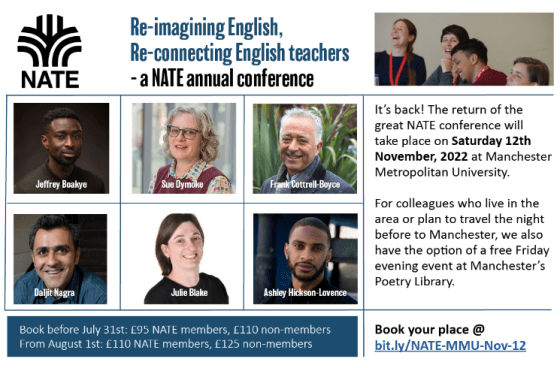
On Saturday 12th November 2022 we will be giving a keynote lecture at Re-imagining English, Re-connecting English teachers NATE Conference 2022 at Manchester … More

We are deeply immersed in drawing out key themes from the interviews conducted over the last two years with Foyle Young Poets and mentors. All the interviews are proving to be highly thought-provoking. Our participants have given us so much rich interview data to reflect on and thematic strands are emerging for further discussion with the Advisory Board in June.

Our Stage 2 interviews are now completed. A special thanks goes out to all the Young Poets in our study … More

Young Poets’ Stories: second set of research interviews have begun this week.

As we move into the Year of the Ox, an animal symbolising hard work, intelligence and reliability, Young Poets’ Stories is celebrating its one year anniversary. To celebrate this turn of the year, Richard and Sue have been delving into the symbol of the Ox in different faiths, beliefs and in poetry. We hope the images, stories and poems will inspire your own writing.
During Lockdown (version 2) Jo Bell, a former Canal Laureate and all round poetry wonder woman, published a daily writing … More

On Monday this week distinguished poet Ruth Padel gave a reading in the Nottingham Poetry Festival 2020 from her new … More
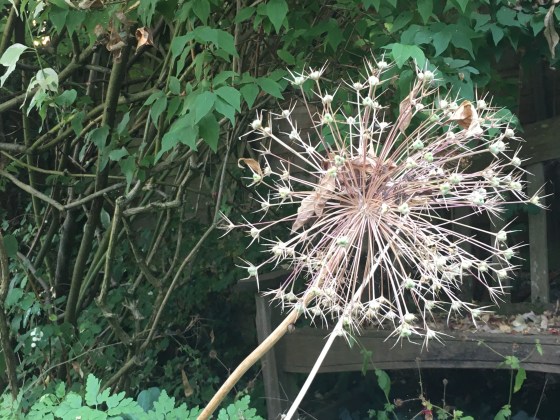
Experiment with writing fibs or atomic poems by using the atomic poetry generator. The generator draws on the Fibonacci sequence, found in the natural world, to determine the word count and line structure of your poem.
 Young Poets' Stories